Removal revelation
Under the Banner of HeavenThe Removal revelation was Ron Lafferty’s written directive for a sequence of killings, presented as a command from God and tied to a larger plan for a City of Refuge. On July 24, 1984, the Lafferty brothers acted on part of it: after Brenda Lafferty and her baby had been killed, they set out to find Chloe Low and Richard Stowe. Their effort to complete the command did not proceed as planned. Low was away, and a missed turn, followed by the intervention of an increasingly anxious Chip Carnes, ended the attempt to reach Stowe that day.
Command and promised purpose
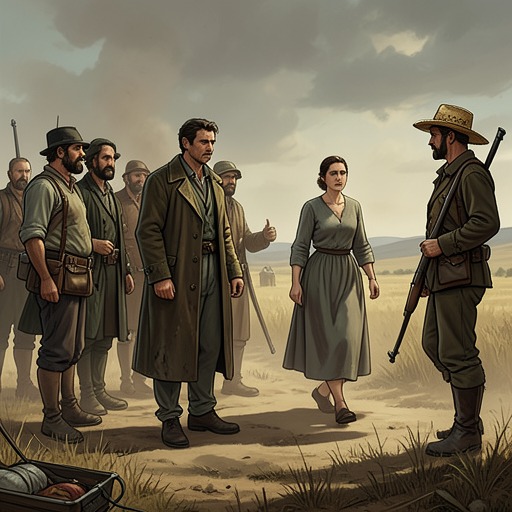
The revelation divided the intended actions into stages. The first had already been carried out by Dan Lafferty, who had killed Brenda and her baby. Ron then drove Dan, Carnes, and Ricky Knapp to the home of Chloe Low in Highland, Utah. The group intended to kill Low and then go to the nearby home of Richard Stowe, president of the Highland LDS Stake, and kill him as well. In Ron’s scheme, completing these commands would clear the way for construction of a City of Refuge beside the Dream Mine, a preparation for the Last Days. The document thus joined immediate violence to a promised religious and communal project: the planned refuge was not a separate undertaking but the anticipated result of obeying the revelation.
The revelation’s authority depended on Ron’s claim that the command came from the Lord. The available account identifies it as his revelation and records the actions undertaken in response; it does not independently establish a divine source. That distinction matters to the document’s role in the episode: it furnished the brothers with a religious warrant for specific acts, while the evidence also shows how contingent their execution was on ordinary circumstances and decisions.
The attempt to carry out the command
The Lows were not home. They had gone to their summer home at Bear Lake for the Pioneer Day holiday. Ron and Dan nevertheless entered the house with Knapp and searched it; Carnes remained outside as a lookout. Two neighborhood boys arrived and repeatedly knocked at the door. The men inside did not answer, and the boys eventually left. The group took cash, a watch, keys, and jewelry. Ron also destroyed Low’s collection of porcelain figurines from Dresden, Germany, which he knew she valued. The intended killing did not occur; the visit instead became a burglary and an act of spite.
The next planned destination was Stowe’s home. Knapp was driving when he missed the turn Ron had meant him to take. The men briefly considered turning back, but Carnes, growing more anxious, urged Ron to abandon the rest of the revelation. Ron agreed, and Knapp continued toward Interstate 15. Stowe was at home that afternoon with his son, using a tractor to remove concrete steps from the house. The account does not claim to know what would have happened had the group arrived. It does establish that a missed turn, followed by Ron’s decision not to return, prevented the planned visit from taking place.
Instead, the four men drove through Salt Lake City and continued west, with Reno, Nevada, as their destination. Dan carried a sawed-off shotgun in the car in case they were stopped by police. The change of course left the revelation’s second set of intended killings unfinished. The episode presents obedience not as an uninterrupted march from command to completion, but as a plan vulnerable to absence, navigational error, fear, and a decision to stop.
The document and the investigation
The revelation became a physical object in the investigation. Police searching Bernard Brady’s house found an affidavit Brady had notarized on April 9. It stated that he had been shown the Removal revelation but wanted no further involvement with it. Officers also seized files concerning the School of the Prophets and a computer on which Ron had typed most of his other revelations. The removal document was not on that computer.
Police later searched an unoccupied house where Ron had been staying before the road trip. In a closet they found a flannel shirt; in its breast pocket was a note on yellow legal paper, written in Ron’s tidy handwriting. It was the original copy of the Removal revelation. The difference between the typed revelations and this handwritten document is concrete: the computer preserved much of Ron’s revelatory writing, but the command at issue was recovered as a paper note tucked inside clothing at the vacant house. The affidavit also places Brady’s awareness of the document before the July killings, while recording his stated wish to disengage.
Testimony and significance
At a later exchange with Utah Assistant Attorney General Creighton Horton, Dan was asked whether Ron had received a revelation identifying people the Lord wanted killed and whether Dan had helped kill them. Dan answered that he saw nothing wrong with that characterization. When Horton asked about Dan’s willingness to be described as a religious fanatic, the question placed the religious framing of the acts directly before him. The exchange does not make the revelation’s claimed source verifiable; it does show Dan affirming the connection between Ron’s revelation and his own participation.
The Removal revelation is therefore significant both as a claimed command and as evidence of how that claim organized conduct. It named intended victims, linked their deaths to a future refuge and the Last Days, and helped define the brothers’ actions as religious duty in Dan’s later account. Yet its implementation stopped short of its stated sequence: Low was absent, Stowe was not reached, and Ron accepted Carnes’s plea to abandon the plan. The recovered handwritten note, Brady’s earlier affidavit, the failed trip to Stowe, and Dan’s courtroom acknowledgment together show the revelation’s reach and its limits: it supplied the rationale for a deadly course of action, but did not dictate every choice made along the way.